[Food]
taken3digital.xyz >> Uncategorized>> [Food]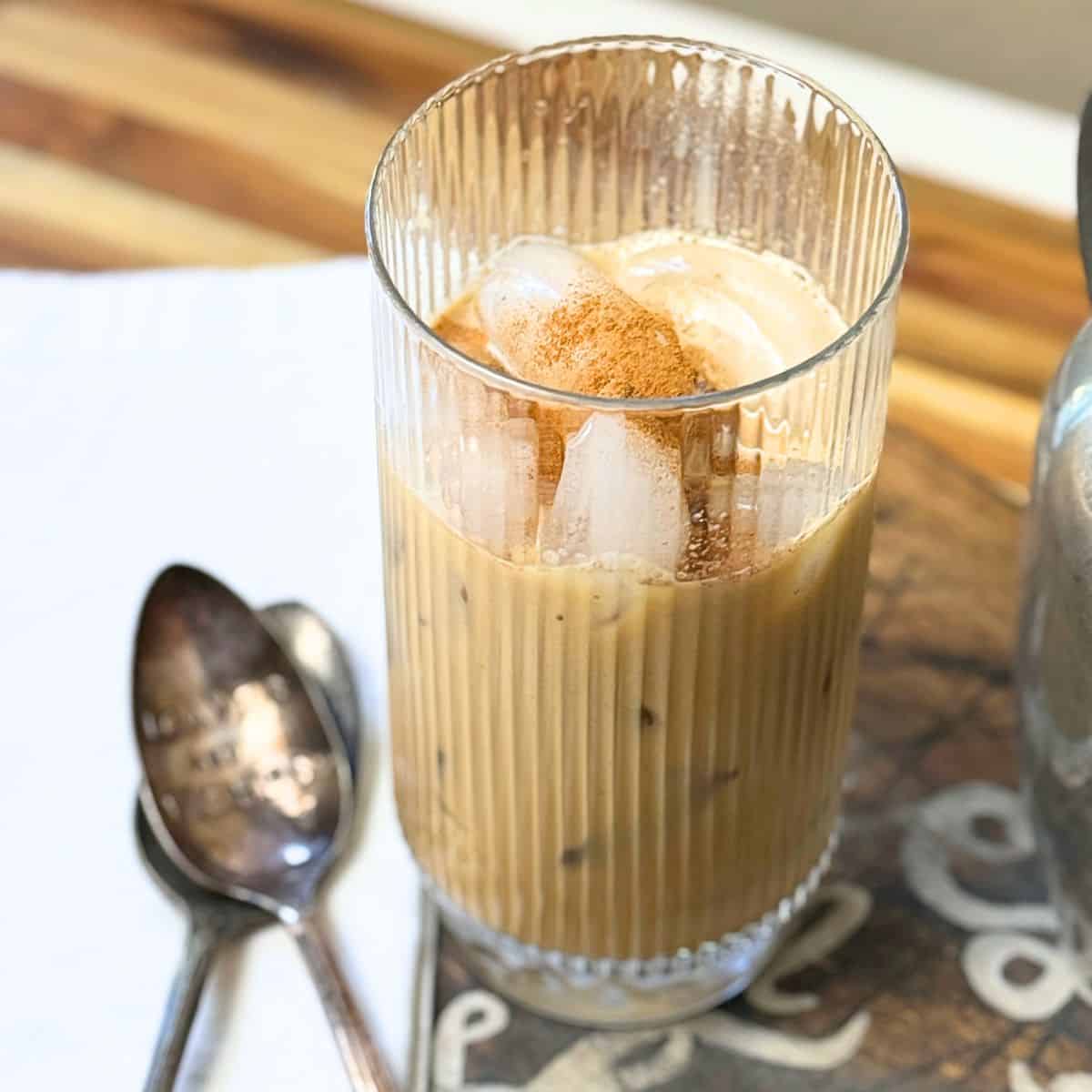
[Food]
There’s something magical about Vietnamese coffee that captivates coffee lovers worldwide. The rich, intense flavor balanced with sweetened condensed milk creates a drink that’s both luxurious and refreshing.
Today, I’m sharing my personal adaptation of this beloved beverage—with a small disclaimer: this is not an authentic Vietnamese coffee recipe.
Instead, it’s my interpretation using espresso rather than traditional Vietnamese coffee grounds and without the iconic Vietnamese phin filter. That said, this version delivers a similar experience with ingredients and equipment you likely already have at home.
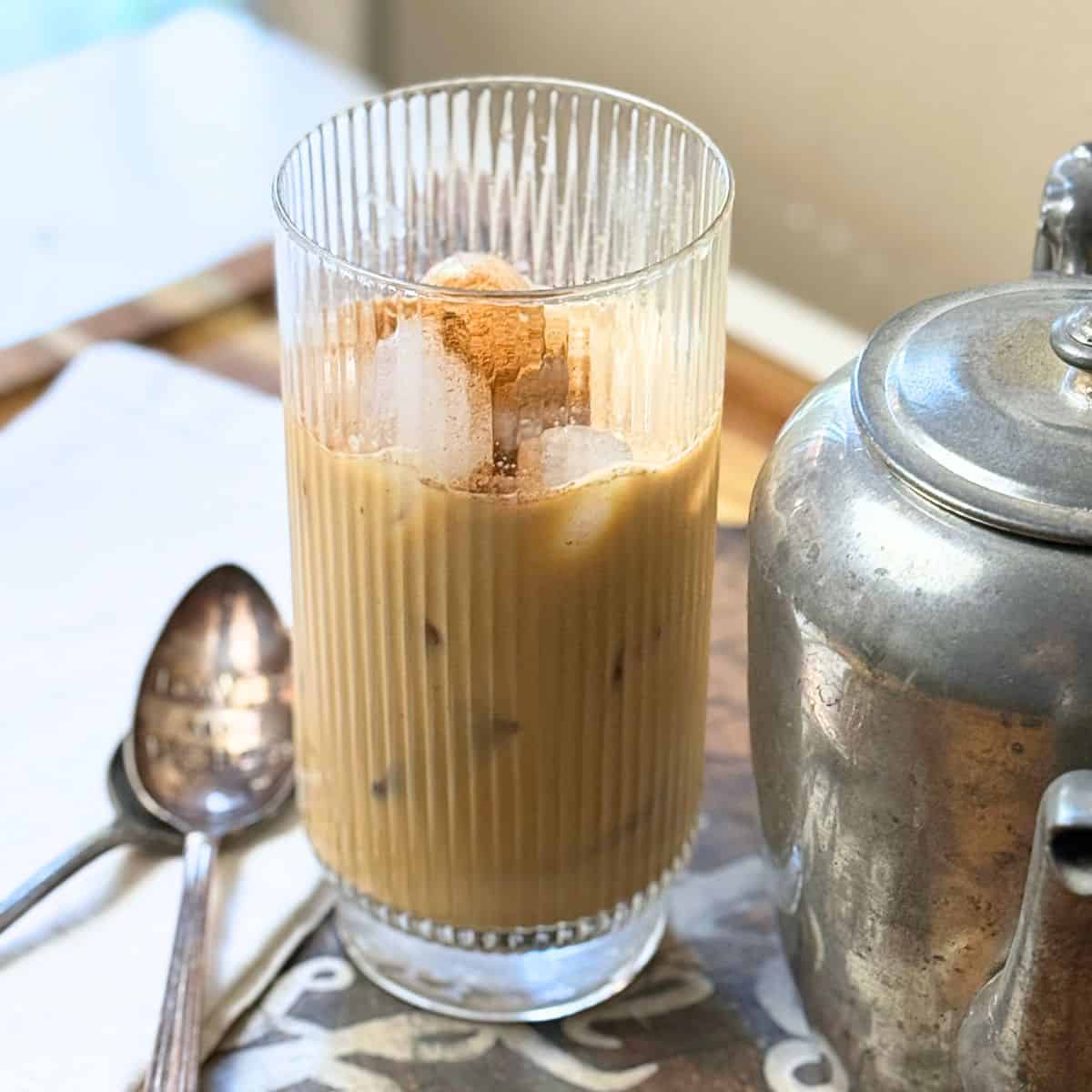
What is Vietnamese Coffee?
Before diving into my recipe, let’s understand what makes traditional Vietnamese coffee (cà phê sữa đá) special. Originally introduced by French colonists in the 1800s, coffee quickly became integrated into Vietnamese culture. Traditional Vietnamese coffee is characterized by:
- Dark roast coffee: Often Robusta beans, which have a stronger, more bitter profile than Arabica
- Brewing method: Using a small metal phin filter that sits atop your cup
- Sweetened condensed milk: Added before or after brewing, depending on whether you want it hot or iced
- Slow drip process: Creating a concentrated, intense coffee experience
Vietnamese coffee culture is more than just a caffeine fix—it’s a daily ritual embraced throughout the country, from busy Hanoi streets to quiet cafés in Ho Chi Minh City. While traditionally served both hot and cold, the iced version (cà phê sữa đá) has become particularly popular internationally.
Watch me make this recipe!
Jump to:
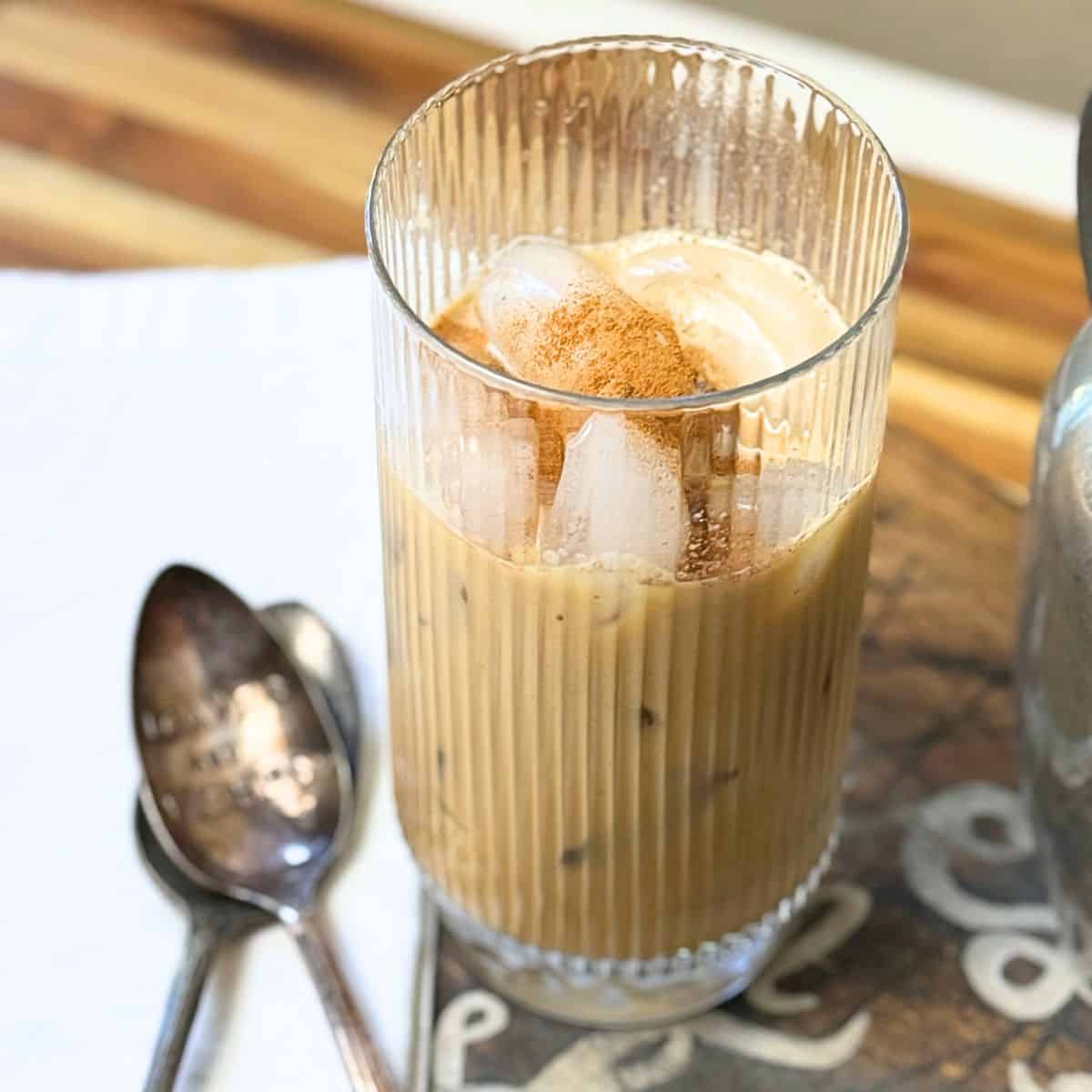
Why This Adaptation Works
My version substitutes espresso for traditional Vietnamese coffee and skips the phin filter in favor of an espresso machine or moka pot. While purists might raise an eyebrow, there are practical reasons for this adaptation:
- Accessibility: Espresso equipment is more common in Western kitchens than Vietnamese phin filters
- Consistency: Easier to achieve reliable results for those new to Vietnamese coffee preparation
- Time efficiency: Significantly faster than the traditional slow drip method
- Similar flavor profile: When prepared correctly, espresso can provide the intensity needed to balance the sweet condensed milk
Is it authentic? No. Is it delicious? Absolutely. Think of this as a Vietnamese-inspired latte that captures the essence of the original while being accessible to make at home.
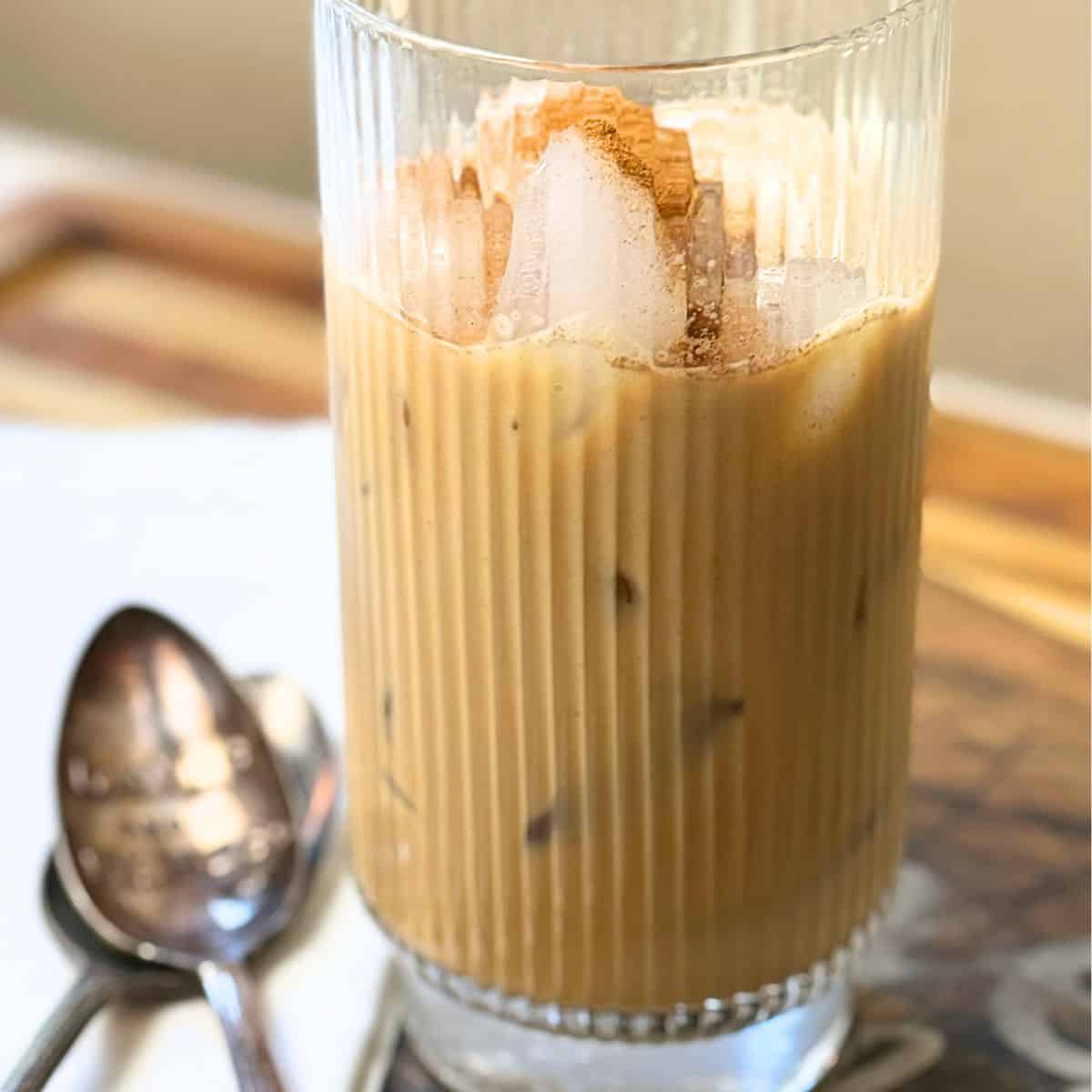
Vietnamese Latte with Condensed Milk: My Recipe
Let’s get to the heart of this blog post—how to make a Vietnamese-inspired coffee that honors the original while using more accessible methods.
- 2 shots espresso (about 2 oz or 60ml)
- 2-3 tablespoons sweetened condensed milk (adjust to taste)
- Ice cubes (for iced version)
- Optional: ¼ teaspoon vanilla extract
- Optional: pinch of ground cinnamon
Equipment
- Espresso machine, moka pot, or strong coffee brewing method of choice
- Glass or mug
- Spoon for stirring
- Ice cube tray (for iced version)
Instructions for Vietnamese Iced Coffee (My Version):

- Step 1: Prepare the glass: Add sweetened condensed milk to the bottom of a tall glass or to the glass you brew espresso in. The exact amount depends on your sweetness preference—start with 2 tablespoons and adjust in future brews.
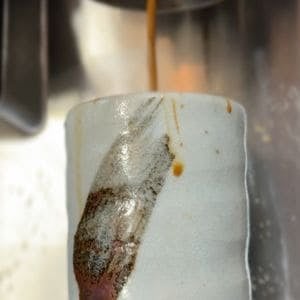
- Brew the espresso: Pull two shots of espresso using your espresso machine, or prepare strong coffee using a moka pot or your preferred method. The key is achieving a concentrated, robust brew that can stand up to the sweetness of the condensed milk.

- Pro tip: add a dash of cinnamon for more flavor!
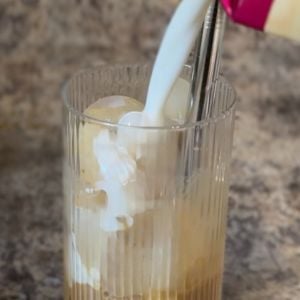
- Mix: Add a splash of half & half, stir thoroughly to combine the espresso and condensed milk.
Chill: Add ice cubes to the glass. As they melt, they’ll further dilute and chill your coffee to the perfect drinking temperature.
Serve: Add a straw and enjoy this refreshing, indulgent beverage!
For a Hot Vietnamese Latte:
Follow the same process but skip the ice. The result is a warm, comforting drink that’s perfect for cooler days. Some people prefer to add the condensed milk after the coffee for hot versions, but I find mixing them together creates a more uniform sweetness.
Hint: leave a useful hint here, like let the grill run for 4-5 minutes to burn off any remnants, then clean it. I like to use this bristle-free barbecue brush (affiliate link) for cleaning the grill.
Tips for the Perfect Vietnamese-Inspired Coffee
While this isn’t an authentic Vietnamese coffee recipe, these tips will help you achieve the best results with my adaptation:
- Glass choice: Serve in a clear glass to appreciate the beautiful layering effect before stirring.nt diet.
- While this isn’t an authentic Vietnamese coffee recipe, these tips will help you achieve the best results with my adaptation:
- Quality matters: Use the best espresso beans you can afford. While traditional Vietnamese coffee uses Robusta beans, a dark roast Arabica or Arabica-Robusta blend works well for this adaptation.
- Condensed milk brand: Different brands of sweetened condensed milk vary in sweetness and consistency. Longevity Brand and Eagle Brand are popular choices, but experiment to find your favorite.
- Get creative: Once you’ve mastered the basic recipe, try adding a drop of vanilla extract or a sprinkle of cinnamon for a personalized touch.
- Ice considerations: For the iced version, use large ice cubes that melt more slowly to prevent excessive dilution. Some enthusiasts even make coffee ice cubes!
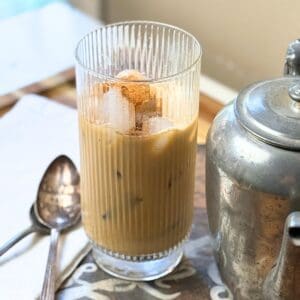
- Glass choice: Serve in a clear glass to appreciate the beautiful layering effect before stirring.
How My Version Compares to Traditional Vietnamese Coffee
Let’s be transparent about the differences:
Traditional Method:
- Uses dark roast Vietnamese coffee (often Robusta)
- Brewed with a phin filter directly over the glass
- Takes 4-5 minutes to brew
- Produces a distinct, slow-drip extraction
- Typically stronger and more bitter
My Adaptation:
- Uses espresso (often Arabica beans)
- Brewed with an espresso machine or moka pot
- Takes under a minute to brew
- Produces a different extraction with crema
- Usually less bitter with more complex flavor notes
While different, both deliver a rich coffee experience balanced beautifully with sweetened condensed milk.
Beyond the Basic Vietnamese Latte
Once you’ve mastered this simple version, consider these variations:
Mocha variation: Add a tablespoon of chocolate syrup to the mix
Egg coffee: Add a mixture of egg yolk whipped with condensed milk for a decadent, custard-like treat
Coconut version: Replace some of the condensed milk with coconut cream
Iced blended: Add all ingredients to a blender with ice for a frappé-style drink
Top Tip
Don’t be afraid to try different kinds of coffee to find your favorite. My favorite coffee beans are Case Ephiany House Blend. It is what my local coffee shop uses and it AMAZING.
FAQ
Is a Vietnamese Latte Strong
Depending on the type of coffee you use, and how much you use versus how much sweetened condensed milk, and half and half, it can be strong.
What is the difference between a Vietnamese Coffee and a latte?
Vietnamese coffee uses a pour over filter called a Phin filter, and a latte uses espresso, which is made using pressure. A Latte will also have more milk than a coffee.
Is Vietnamese Coffee healthy?
I am not a doctor or medical professional, however, there are benefits, and downsides to coffee. Coffee beans have lots of antioxidents, and can be beneficial. I would not recommend consuming this in excess due to its sugar content. If you want to know more about the benefits and risks of coffee you can read this article from Johns Hopkins Medical.
Final Thoughts
This adaptation of Vietnamese coffee may not be authentic, but it offers a delicious gateway into the world of Vietnamese coffee flavors. The combination of strong espresso and sweet condensed milk creates a balanced, indulgent beverage that works beautifully both hot and iced.
If this adaptation sparks your interest in Vietnamese coffee culture, I encourage you to explore further—perhaps invest in a traditional phin filter and Vietnamese coffee beans to experience the authentic version. Until then, enjoy this simplified Vietnamese latte with condensed milk that brings a touch of Vietnamese coffee culture to your kitchen.
Whether you’re sipping this Vietnamese iced coffee recipe on a hot summer day or enjoying a hot Vietnamese latte during cooler months, this adaptable recipe offers a delightful coffee experience that pays homage to the Vietnamese original while working with what you have available. Cheers to coffee adaptations that bring international flavors into our daily routines!
Looking for more recipes?
Take a look at some of these! We are creating new recipes each week so make sure you come back!
Pairing
These are my favorite dishes to serve with Vietnamese Iced Coffee:
Ingredients
- 2 shots Espresso or 1 cup of Coffee
- 2-3 tablespoon Sweetend Condensed Milk
- ¼ cup Half and Half omit if using coffee
- 1 teaspoon Cinnamon optional
Instructions
-
Brew your coffee or espresso. I prefer to brew my espresso directly into the container with the sweetened condensed milk, and cinnamon
-
Add sweetened condensed milk and cinnamon (optional).
-
Mix well, pour over ice, and add half and half (omit half and half if using coffee).
-
Serve!
Notes
- Not traditional, but delicious – This adaptation uses espresso instead of Vietnamese coffee and skips the phin filter, making it accessible for those without specialized equipment.
- Condensed milk is key – The sweetened condensed milk creates the signature flavor profile; different brands will yield slightly different results.
- Ratio matters – Start with 2 tablespoons of condensed milk to 2 shots of espresso, then adjust to your sweetness preference.
- Temperature contrast – For the iced version, the hot espresso melts the condensed milk before the ice cools everything down, creating perfect integration.
- Strength is essential – Use strong espresso or concentrated coffee to balance the sweetness of the condensed milk.
- Make it your own – Try additions like vanilla extract or cinnamon for a personalized touch.
- Ice cube tip – Use large ice cubes for slower melting and less dilution of your Vietnamese iced coffee.
- Versatile serving options – Works beautifully both hot and cold, making it perfect year-round.
Nutrition
Nutrition Facts
Vietnamese Coffee
Amount Per Serving
Calories 90
Calories from Fat 63
% Daily Value*
Fat 7g11%
Saturated Fat 4g20%
Polyunsaturated Fat 0.4g
Monounsaturated Fat 2g
Cholesterol 21mg7%
Sodium 46mg2%
Potassium 157mg4%
Carbohydrates 5g2%
Fiber 1g4%
Sugar 3g3%
Protein 2g4%
Vitamin A 220IU4%
Vitamin C 1mg1%
Calcium 86mg9%
Iron 0.3mg2%
* Percent Daily Values are based on a 2000 calorie diet.
Post Views: 1,113